
Європейська безпека: забезпечення конкурентоспроможності ЄС
- Area: Економіка / Economics
- Author: А. О. Задоя, С. О. Федулова (ред.)
- Publishing house: Видавництво УАН / ANU Publishing
- Language: Українська / Ukrainian
- Category: Монографія / Monograph
- Year: 2026
Hits: 180
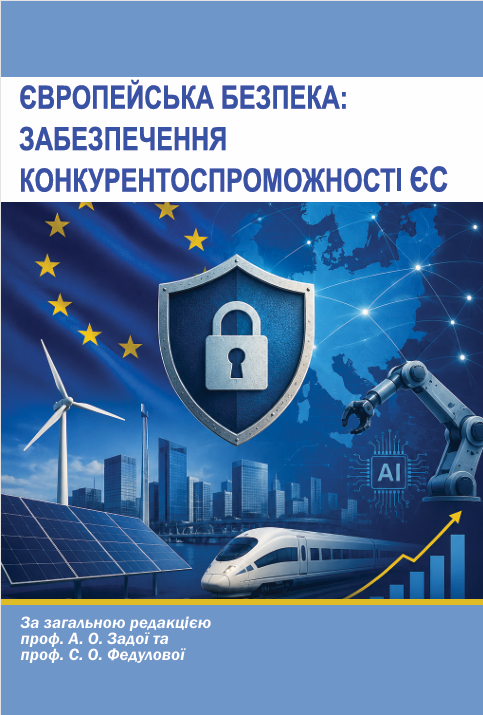
Ця монографія є спробою комплексного міждисциплінарного осмислення сучасної європейської безпеки через призму забезпечення конкурентоспроможності ЄС. Її концептуальна логіка базується на припущенні, що у ХХІ столітті стійкість Європи визначатиметься не лише військовими союзами чи політичними деклараціями, а насамперед здатністю інтегрувати економічну політику, інновації, технології, фінансові механізми, ринки праці, інфраструктуру та правові інститути у єдину систему стратегічної адаптації.
Структура монографії охоплює шість взаємопов’язаних тематичних блоків.
Перший розділ присвячений концептуальному осмисленню взаємозалежності безпеки та конкурентоспроможності, аналізу політико-економічних детермінант сучасної Європи, ролі сталих фінансів та інфраструктури якості як основи стійкого розвитку.
Другий розділ досліджує корпоративно-технологічний розрив у Європі, включаючи глобальні інформаційно-мережеві трансформації, блокчейн-регулювання, транспортну інфраструктуру та бізнес-інновації як інструменти подолання структурних обмежень.
Третій розділ зосереджується на інноваційному розвитку, цифровізації, штучному інтелекті, інвестиційних процесах, борговій безпеці та ролі малого і середнього бізнесу в інтеграції України до стратегічних секторів ЄС.
Четвертий розділ аналізує майбутнє праці, включаючи автоматизацію, структурні зміни зайнятості, перекваліфікацію, міграційні процеси та соціальну згуртованість як основу економічної стійкості.
П’ятий розділ розкриває стратегічну автономію ЄС у ширшому геополітичному контексті, охоплюючи питання безпекової архітектури, арктичної політики та інноваційного потенціалу.
Шостий розділ присвячений правовим аспектам економічної інтеграції України до ЄС, зокрема верховенству права, адаптації законодавства, економічній стійкості та розвитку солідарної економіки.
Наукова новизна монографії полягає у поєднанні безпекового, економічного, технологічного, соціального та правового вимірів у єдиній аналітичній рамці, що дозволяє розглядати конкурентоспроможність ЄС не лише як економічний показник, а як стратегічну категорію, безпосередньо пов’язану зі стійкістю європейського проєкту.
Монографія адресована науковцям, викладачам, студентам, державним службовцям, політикам, експертам з міжнародної економіки, європейської інтеграції, безпеки та права, а також усім, хто прагне глибше зрозуміти природу сучасних трансформацій у Європі.
У підсумку, головна ідея цієї праці полягає в тому, що майбутнє Європи визначатиметься здатністю поєднати безпеку, інновації, економічну стійкість, правову якість та соціальну згуртованість у цілісну модель розвитку. Саме в такому синтезі формується нова парадигма європейської конкурентоспроможності як фундаменту безпеки, стратегічної автономії та глобальної суб’єктності Європейського Союзу.
Summary
This monograph is an attempt at a comprehensive interdisciplinary understanding of modern European security through the prism of ensuring the competitiveness of the EU. Its conceptual logic is based on the assumption that in the 21st century, Europe's resilience will be determined not only by military alliances or political declarations, but primarily by the ability to integrate economic policy, innovation, technology, financial mechanisms, labor markets, infrastructure and legal institutions into a single system of strategic adaptation.
The structure of the monograph covers six interconnected thematic blocks.
The first section is devoted to the conceptual understanding of the interdependence of security and competitiveness, the analysis of political and economic determinants of modern Europe, the role of sustainable finance and quality infrastructure as the basis for sustainable development.
The second section examines the corporate-technological divide in Europe, including global information and network transformations, blockchain regulation, transport infrastructure and business innovation as tools for overcoming structural constraints.
The third chapter focuses on innovative development, digitalization, artificial intelligence, investment processes, debt security and the role of small and medium-sized businesses in Ukraine’s integration into strategic sectors of the EU.
The fourth chapter analyzes the future of work, including automation, structural changes in employment, retraining, migration processes and social cohesion as a basis for economic sustainability.
The fifth chapter reveals the EU’s strategic autonomy in a broader geopolitical context, covering issues of security architecture, Arctic policy and innovation potential.
The sixth chapter is devoted to the legal aspects of Ukraine’s economic integration into the EU, in particular the rule of law, legislative adaptation, economic sustainability and the development of a solidarity-based economy.
The scientific novelty of the monograph lies in the combination of security, economic, technological, social and legal dimensions in a single analytical framework, which allows us to consider the competitiveness of the EU not only as an economic indicator, but as a strategic category directly related to the sustainability of the European project.
The monograph is addressed to scientists, teachers, students, civil servants, politicians, experts in international economics, European integration, security and law, as well as to all those who seek to understand more deeply the nature of modern transformations in Europe.
In conclusion, the main idea of this work is that the future of Europe will be determined by the ability to combine security, innovation, economic sustainability, legal quality and social cohesion into a holistic development model. It is in this synthesis that a new paradigm of European competitiveness is formed as the foundation of security, strategic autonomy and global subjectivity of the European Union.